
Lymphatic Drainage
WHY FLUID BALANCE, INFLAMMATION, AND RECOVERY DEPEND ON IT
The lymphatic system plays a critical role in fluid balance, immune function, and waste removal. When lymphatic flow becomes sluggish, fluid, inflammatory by-products, and metabolic waste can accumulate in tissues, contributing to bloating, puffiness, heaviness, and slow recovery.
Often people don’t realise that persistent bloating, puffiness, heaviness, or slow recovery can be signs that the lymphatic system is overloaded, rather than something they are doing wrong.
People usually start searching for lymphatic drainage because something in the body feels “stuck.” This may show up as bloating, puffiness, heaviness in the limbs, slower recovery, or skin that feels congested despite otherwise healthy habits.
Understanding how the lymphatic system works helps explain why these symptoms often persist, and why supporting lymphatic flow can make such a noticeable difference.
Over the past decade, we’ve seen that lymphatic support works best when treated as a system, not a single technique.

20 minutes. Personalised. Expert-led.
What is the lymphatic system?
The lymphatic system is a network of vessels, lymph nodes, and fluid that runs alongside the bloodstream. Its role is to collect excess fluid, metabolic waste, inflammatory by-products, and immune debris from tissues and return them to circulation for processing and removal.
Unlike the cardiovascular system, the lymphatic system does not have a central pump. Instead, it relies on movement, breathing, muscle contraction, and nervous system balance to keep lymph flowing.
When these inputs are reduced or disrupted, lymphatic flow can slow, allowing fluid and inflammatory waste to accumulate in tissues.
Why lymphatic congestion is so common
Modern life creates several conditions that make lymphatic congestion more likely, even in people who otherwise look healthy.
Common contributors include:
Sedentary lifestyles reduce the natural muscular pumping that drives lymphatic flow
Chronic stress and nervous system overload
Inflammation following illness, injury, or surgery
Hormonal changes or rapid weight loss
Poor sleep and reduced recovery capacity
Over time, this combination leaves the lymphatic system under-stimulated and overburdened, allowing fluid and inflammatory waste to accumulate in tissues rather than being cleared efficiently.
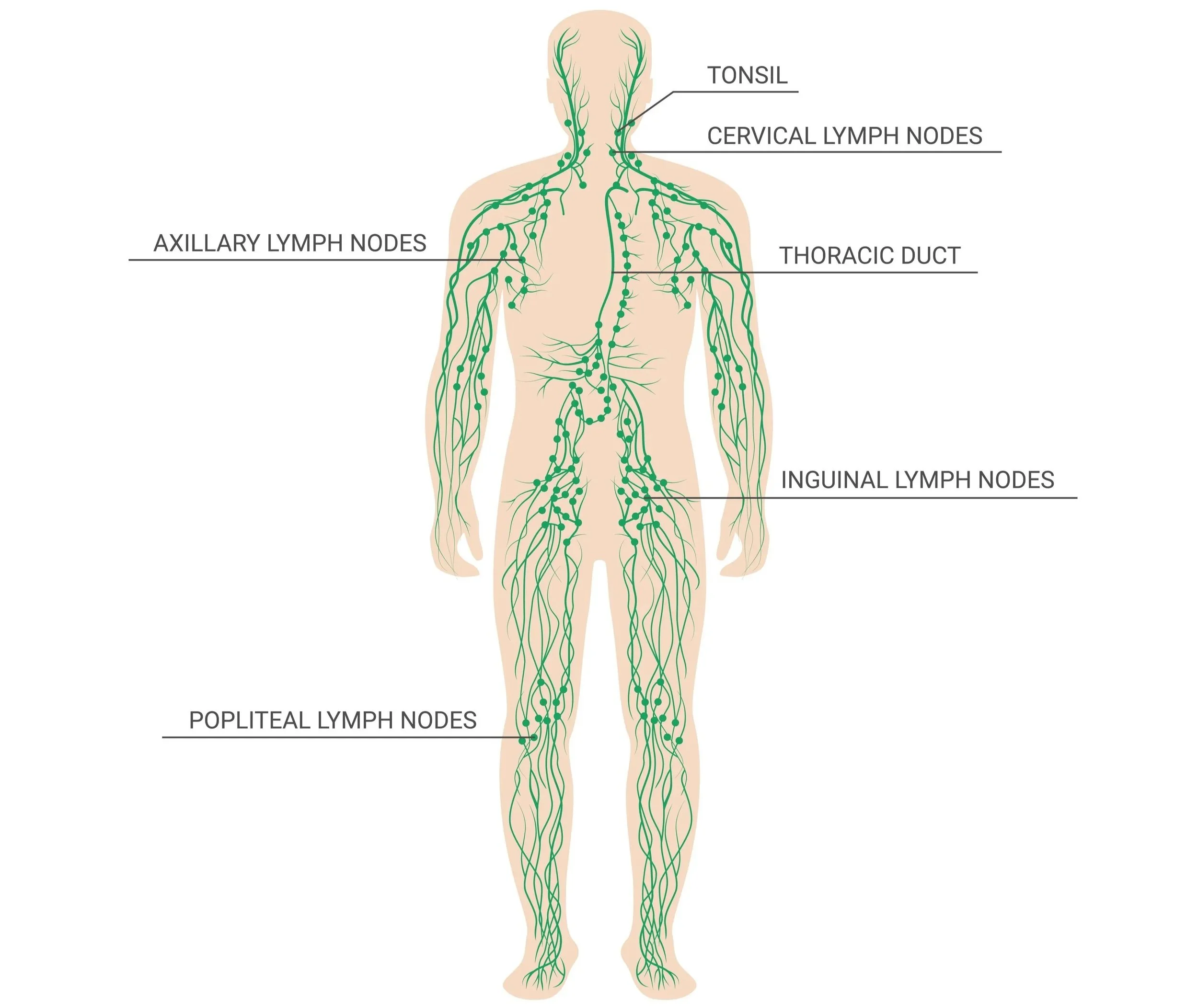
Simplified illustration of lymphatic vessels and major node clusters involved in fluid transport and immune filtering.
Common goals associated with lymphatic drainage
People rarely seek lymphatic drainage without a reason. Common goals include:
Reducing bloating, puffiness, or fluid retention
Supporting recovery after surgery, illness, or injury
Supporting fat metabolism and body contouring efforts
Reducing inflammation-related discomfort
Feeling lighter, clearer, and less sluggish overall
These goals often overlap because the lymphatic system supports multiple body systems at once.
Why guidance and structure matter for lymphatic health
Lymphatic support is often misunderstood as something that can be addressed with a single technique or occasional intervention. In reality, the lymphatic system is highly responsive to timing, sequencing, and overall physiological context.
Compression, manual techniques, and movement-based stimulation can all play an important role — but their effectiveness depends on when they are used, how they are combined, and what else is happening in the body at the same time. Factors such as circulation quality, nervous system state, inflammatory load, hydration, and recovery rhythms all influence lymphatic flow.
Without experienced assessment and a structured approach, even well-intentioned efforts can produce inconsistent or short-term results. Sustainable lymphatic support is typically achieved when techniques are applied intentionally, consistently, and as part of a broader recovery strategy — not in isolation.
This is where experience and clinical sequencing make the difference between temporary relief and lasting change.
Why recovery and circulation matter
Effective lymphatic flow improves when the body is able to shift out of prolonged stress and into a recovery-focused state.
Improved circulation helps deliver oxygen and nutrients to tissues. Reduced inflammation lowers lymphatic load. A calmer nervous system supports rhythmic movement and fluid exchange.
When these elements work together, the lymphatic system is better able to clear waste, reduce congestion, and support overall tissue health.
Supporting circulation and recovery creates the conditions the lymphatic system needs to function effectively.

What you gain from a consultation
A consultation allows us to assess lymphatic health, circulation, and recovery patterns so support can be targeted, sequenced, and appropriate to your body.
We explore your symptoms, recovery patterns, stress levels, and goals. From there, we translate that information into a clear, practical plan focused on supporting fluid movement, reducing inflammatory load, and improving overall balance.
Clients often say that understanding why their body feels heavy or swollen is as valuable as the physical changes that follow.
Most clients come to us not just to reduce swelling, but to feel lighter, clearer, and more comfortable in their body again.
Ready to approach lymphatic health more clearly?
If you are experiencing bloating, swelling, heaviness, or slow recovery and want a clearer, more structured approach, start with a consultation. We will help you understand what may be driving lymphatic congestion and what to do next.
20 minutes. Personalised. Expert-led.
